
Nepal faces significant environmental challenges, particularly in urban area.
Kathmandu, often ranks among the most polluted cities globally it recorded PM2.5 levels reaching 154 μg/m³, classifying it as “unhealthy” for sensitive groups. Source: Kathmandu Post | 2024.
Nepal has a high overall pollution index of 84.15. Specific areas of concern include air pollution (75.90), water pollution (75.76), and dissatisfaction with garbage disposal (75.17). Source: Numbeo | https://www.numbeo.com/pollution/country_result.jsp?country=Nepal
The Harsh Reality of Human Impact on the Environment
Modernization is essential for progress, but it’s disheartening to see how humanity has often overlooked its impact on nature. In our pursuit of advancement, we’ve left a detrimental mark on the environment. We have deforested vast areas, polluted our air and water, and dumped waste into natural resources. It’s time to recognize these consequences and strive for a balance where progress and environmental preservation coexist harmoniously.
Our detrimental activities have led to climate change. Over the past decade, we’ve seen a significant increase in the intensity of floods, droughts, landslides, and global warming. It’s crucial for humanity to prioritize and care for nature to minimize further damage. Although the process isn’t yet irreversible, it will require substantial effort and harmony to restore balance and protect our planet for future generations.
Bridging Hindu Mythology with Environmental: Ragini's Unparalleled Vision
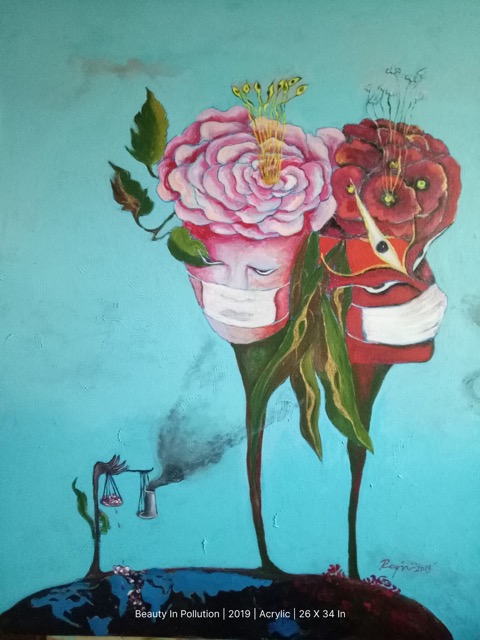
“Ragini’s Desperation to Create Awareness”
We are destroying the forest that we worship. We have polluted the rivers which are considered to be God and Goddesses. She has put the slogan on the Ano art exhibition as ‘Let’s protect nature, let’s protect our future’. She also revelead that she had spent three years creating this series to convey the message of nature conservation.
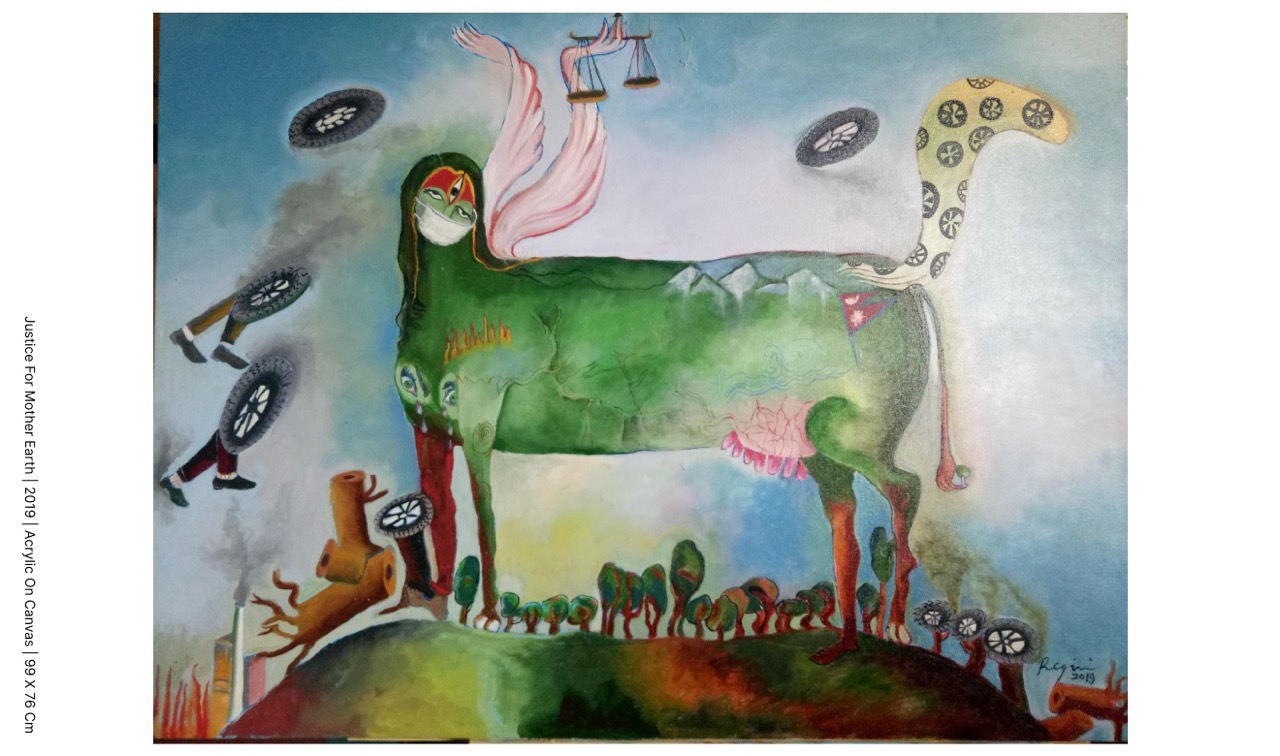
In Upadhyaya’s canvas, problem such as deforestration, air pollution by burning tyres, and river pollution by throwing garbase in the river has been raised. Along with the worshiping var peepal and basil, she has given the message that such plants should be planted. The tears of the polluted river and the crying of the cut trees are also shown in the picture. After the destruction of the tree’s, she has presented the effect of black clouds in the sky and the heat that has increased here. She has also depicted the pain of Hanuman’s Sanjivani forest loss, Buddha’s loss of his Var peepal tree to perform penance, Parijat’s loss of existence. If we all contribute to nature conservation in our respective areas, the earth will remain with nature for our future generations.
Tree's Dressed on Modern Attire?
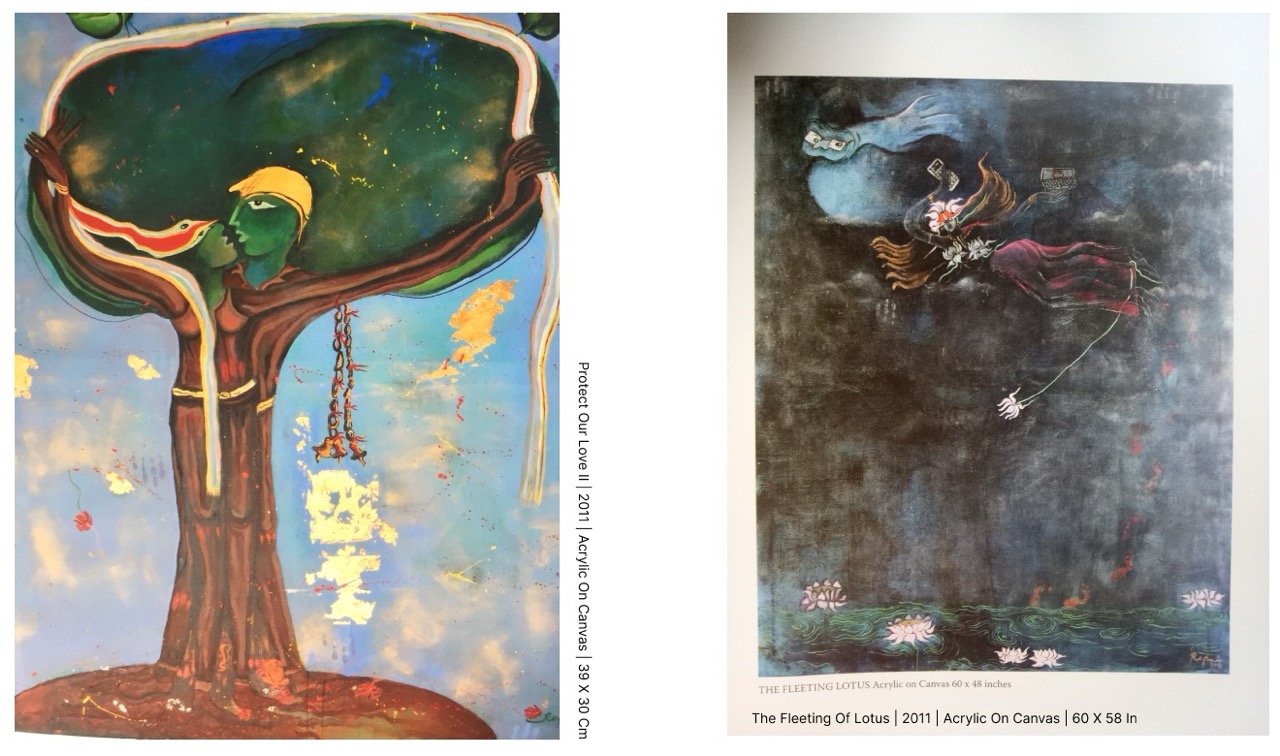
“Be it peepal and banyan trees dressed in modern attire, Goddess Lakshmi’s bespectacled owl, or the perspiration of a nervous Ganga; Ragini’s visuals bring nature’s predicament to her viewer in something of a poignant humour. They don’t fail to reiterate the beauty of worship itself, and to remind us that nature too dreams of love and a family.”
-Asha Raje Gaekward | Director | Gaekward Art Foundation, Mumbai, India | 2011

Director of Art History, VCU-Qatar and Associate Professor of Asian Art

Dina Bangdel's Words on "Nature Speaks"
“A world-class printmaker and renowned artist, Ragini Upadhyay Grela’s series engages the viewer in a provocative dialogue of tradition and change, where Hindu mythic symbolism are woven within the issues of urban ecological concerns. This series reflects a striking cultural commentary to this global phenomenon- an exploration of the environment and urbanization through the elements of the natural world. Ragini’s imagery and visual symbols are deeply embedded between nature and man. This symbiotic relationship is thus understood as the essence of cosmic order. Nature, as feminine energy and life-giving force, is the core subject of this series, embodied through personified aspect of celestial rivers, sacred trees, and divine plants. Yet, in her paintings, Nature’s contemporary state of existence is poignantly illustrated, as nature cries out against atrocities of pollution, urban environmental conditions, and decay of traditional spiritual values. Of this, the artist states, “On behalf of Nature, I convey their silent pain, their problems and injustice, as well as their rights as a living entity”. This series consists of new works in large acrylic canvases and watercolors, where Ragini ingeniously plays with the juxtaposition of associated Hindu images and the signifiers of environmental decay. Through the rich hues of greens and blues punctured by brilliant reds and warm browns, the paintings represent these personified forms of nature. As the viewers will recognize, each work is layered, deeply symbolic and iconographic, rooted within South Asian spiritual identity and familiar cultural symbols. In Buddha and the Banyan Tree, Pregnant Parijat or Bar-Peepal for example, the canvases come alive with the organic forms of
the personified trees, evoking hope and regeneration. In the fluid forms of river goddesses, whether they are meant to symbolize the sacred waters of Ganges, Yamuna, or Nepal’s Bagmati, we find a sense of visual commentary, as the celestial
goddesses wear gloves and boots reacting to the pollution and decay within. As characteristic hallmarks of her style, Ragini’s richly coded visual narrative in this series very successfully articulates contemporary global realities of Nature.”
– Dina Bangdel | Director of Art History, VCU-Qatar and Associate Professor of Asian Art, Department of Art History, Virginia Commonwealth, University, USA | 2011.

