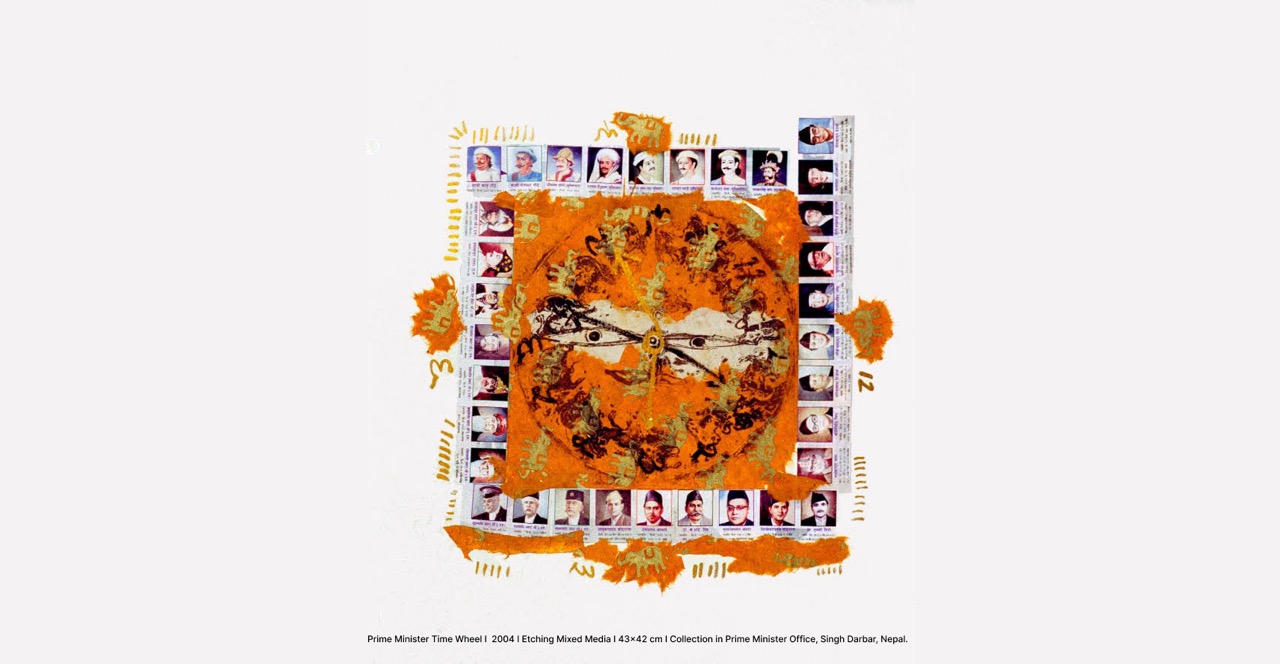
Time has never waited for anyone. It flows ceaselessly, indifferent to the moments it carries away. Unbiased and unwavering, time does not distinguish between the joys and sorrows of life; it flows steadily, untouched by life’s events. Many philosophers consider time to be the greatest healer, as the passage of time brings relief to pain and suffering. In its continuous, undisturbed flow, time teaches us that all experiences, whether joyous or sorrowful, are transient, urging us to embrace each moment fully.
Time Awaits No One: The Transience of Life in Ragini Upadhyaya's 'Time Wheel' Series
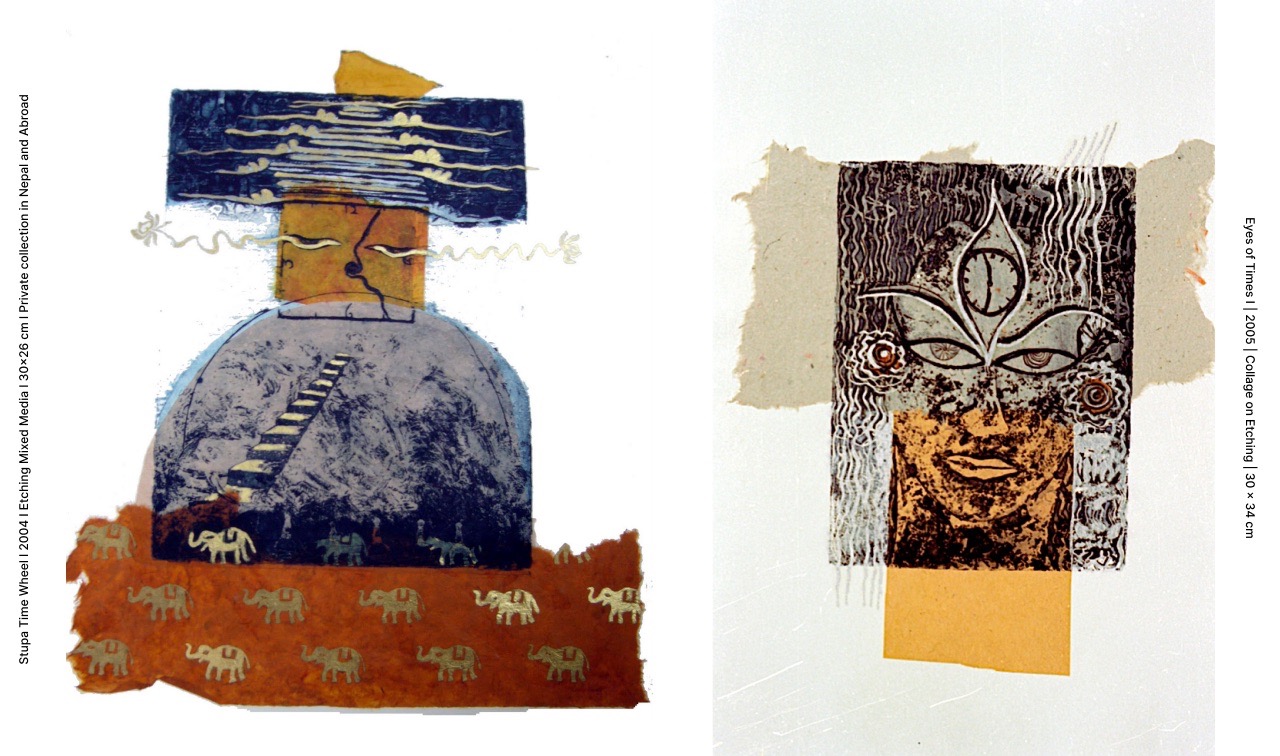
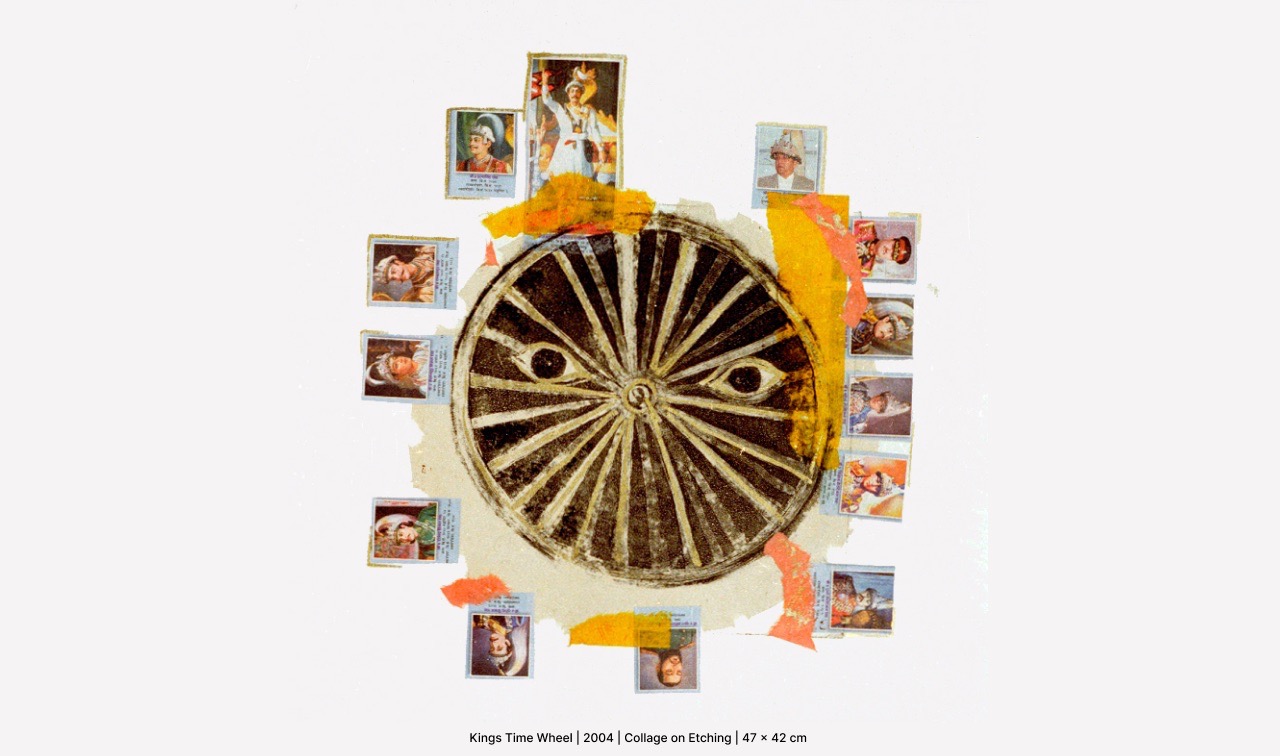
Ragini Upadhyaya explores the fleeting nature of existence in her profound series, “Time Wheel.” She theorizes that time is evanescent; those who once walked this earth are no longer here, and one day, we too will be gone. Yet, the places we inhabited will continue to exist, indifferent to our presence.
Most of the paintings in her Time Series feature eyes depicted in various styles. Some eyes hold religious significance, such as the Wisdom Eyes of Swayambhunath, while others are more general representations. According to the artist, these eyes serve as mute witnesses to the diverse events of humanity. They symbolize the unrelenting passage of time, capturing this concept in the most creative and profound manner.
Ragini's People's Power Series: Collabroative Analysis With Time Series


The Royal Massacre 2001: Dipendra Wants Justice
“The Royal Massacre of Nepal in 2001 stands as a somber chapter in the nation’s history, shrouded in mystery and tragedy. On that fateful night, the Nepalese royal palace was engulfed in an unimaginable horror as Crown Prince Dipendra, in a fit of apparent rage, gunned down members of his own family, including his father King Birendra and mother Queen Aishwarya, before ultimately turning the weapon on himself.”
Sources: BBC, CNN, The Guardian, The New York Times, official statements from the Nepalese government, academic publications, and testimonies from individuals involved or affected.
Art Information:
Title: Dipendra Wants Justice
Year: 2006
Medium: Etching Mixed Media
Dimensions: 44.5×26.5
Location: Private Collection in Germany
Sangeeta Thapa's Analysis on Time Wheel

Ragini’s prints remind us of the seven deadly sins: pride, anger, lust, greed, envy, avarice and sloth which have made mankind succumb to the temptation of believing in the myth of their invincibility and immortality. Against this enduring backdrop of the super ego and human culpability,many dramas unfold. Ragini picks up the key to these theatrics. Love and compassion, feminism and futility, politics and non-violence along with the quest for truth, have added their gravity to the artist’s own personality and shaped the narrative of her prints. Ragini offers reprieve to those who follow the rightful path, free from the snare of the seven deadly sins. Ragini has maintained that her art ‘is a mirror of society’. Ragini lives and breathes the travails of her country.Her works have always had a political inclination.When I asked Ragini what inspired this series of work evolved, she said, “We can’t take anything with us when we die, so why the greed ? I want to say that Time will ultimately judge us all, irrespective of who we are.We need to be remembered for our good works.”
– Sangeeta Thapa | Art Curator | Siddhartha Art Gallery | Kathmandu, Nepal.

People’s Movement Nepal
Ragini Upadhyaya has created a powerful series of paintings inspired from the People’s Movement II in Nepal. Her artwork beautifully showcases the strength of the people and the impact of their struggle. Through her paintings, she captures both the pain experienced by the citizens and their hope for a better future in a new Nepal. Upadhyaya’s work highlights the resilience and dreams of the Nepali people during this significant time in history.
People’s Perspective
“Most of her works reflect on the might of people’s power. “We Nepalis are apparently like bull, quite and nonchalant,” she elaborates one of her works titled ‘Nepal Moves’, “But once this bull rises from repose, he brings about a cyclone”. This is a symbolic statement of the people’s power. Likewise, in another canvas titled “Dipendra wants justice”, she delves into the Royal Palace Massacre of June1, 2001. She also has two paintings on the slain Royals on that fateful day. Ragini has not confined her to the political topsy-turvy alone, she has rather taken a stride with solution that will bring about peace and stability in the country. What is this solution then? “Constituent Assembly is Sanjivani for ailing Nepal, as one of the paintings titled “Keep it alive” depicts so. Here mighty Hanuman seems to be carrying a mountain of Constituent Assembly to keep Nepal alive. Ragini’s works are idiosyncratic with symbols.”
-Shekhar Kharel | The Kathmandu Post | Kathmandu, Nepal | June 7, 2006.
People Power (2006 - 2007): A Notable Series

Public power | 2006 | Etching Mixed Media | 45×30 cm | Private Collection in Germany

Ten _Headed Ruler | 2006 | Etching Mixed Media | 47.5x27cm | Private Collection in the USA
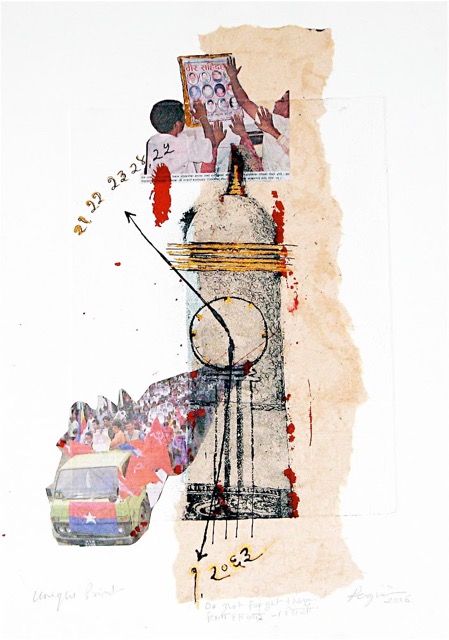
Don’t Forget Them | 2006 | Etching Mixed Media | 46×25 cm

Red Sky 2006 | Etching Mixed Media | 47x 31.5 cm | Private Collection in Nepal

